Showing posts with label protected designations of origin. Show all posts

Wednesday, 11 August 2021

Geographical Indications: Gower Salt Marsh Lamb - First Product to be registered under the British Scheme

Gower Meat Selection at a Swansea Restaurant
Author Vouliagmeni Licence Public Domain Source Wikipedia Commons


Jane Lambert

By a decision notice dated 23 July 2021 the Secretary of State for the Environment, Food and Rural Affairs has decided to register 'Gower Salt Marsh Lamb’ as a Protected Designation of Origin under the UK quality scheme for protected designations of origin and protected geographical indications for agricultural products and foodstuffs.  The significance of the decision is that it is the first product to be registered under the British scheme.  The application was made on 1 Jan 2021 (the day after the transition or implementation period provided by art 126 of the agreement for British withdrawal from the EU expired) and the product was added to the register today.

In Geographical Indications I wrote:

"Ageographical indication' is defined as a sign used on products that have a specific geographical origin and possess qualities or a reputation that are due to that origin (see the "Geographical Indications" page of the WIPO website). The sign must identify a product as originating in a given place. In addition, the qualities, characteristics or reputation of the product should be essentially due to the place of origin. Since the qualities depend on the geographical place of production, there is a clear link between the product and its original place of production. Examples include 'Scotch' for whisky from Scotland, 'Champagne' for sparkling wine from the Champagne region of France and “Parma” ham for dry-cured ham from the Parma region of Italy."

In The New Protected Food Names Scheme as it will apply in Wales I added:

"The signs used on products that have a specific geographical origin and possess qualities or a reputation that are due to their origin are known as geographical indications. They are a type of intellectual asset that the United Kingdom and other parties to the WTO agreement are required to protect by Section 3 of the Agreement on Trade-Related Aspects of Intellectual Property Rights ("TRIPS"). In the United Kingdom, these requirements are satisfied by the law of passing off, the registration of certification and collective marks and sui generis EU intellectual property rights established by Regulation (EU) No 1151/2012 of the European Parliament and of the Council of 21 November 2012 on quality schemes for agricultural products and foodstuffs OJ L 343, 14.12.2012, p. 1–29."
The UK is required to continue to protect protected designations of origin, protected geographical indications and traditional specialities guaranteed by art 54 (2) of the withdrawal agreement. That requirement is implemented by The Agricultural Products, Food and Drink (Amendment) (EU Exit) Regulations 2019 (SI 2019 No 1366) which amend Regulation 1151/2012. Essentially, the EU legislation as amended by that statutory instrument has been incorporated into the laws of Wales, England, Scotland and Northern Ireland by s.3 (1) of the European Union (Withdrawal) Act 2018 with effect from 31 Dec 2020.    

I discussed the UK scheme in Geographical Indications in the UK after 31 Dec 2020 in NIPC Law on 30 Sept 2020.   I considered how the new British scheme would apply in Wales in The New Protected Food Names Scheme as it will apply in Wales on 26 Oct 2020 in NIPC Wales.   I explained the way in which the EU legislation had been amended and incorporated into domestic law in How Brexit has changed IP Law in NIPC Brexit on 17 Jan 2021 and in my presentation and handout IP after Brexit on 26 Jan 2021.

The Department for the Environment, Food and Rural Affairs has published a full product specification for Gower salt marsh lamb.  It identifies the applicant for registration, the product's name and description, its geographical area, proof of origin, method of production and link with the area.  The City and County of Swansea will be the inspection body for the product. 

Gower salt marsh lamb is not the only famous product from the area.  The Gower peninsula is an important gastronomic region of the British isles.  It is also famous for its beef, game, fruit, vegetables, seafood and many other products.  A distinctive local speciality is laverbread made from seaweed.  Further information on the area's foods can be obtained from the Wikipedia article Cuisine of Gower.

Anyone wishing to discuss this article or any of its contents may call me on 020 7404 5252 during office hours or send me a message through my contact form.

Monday, 26 October 2020

The New Protected Food Names Scheme as it will apply in Wales

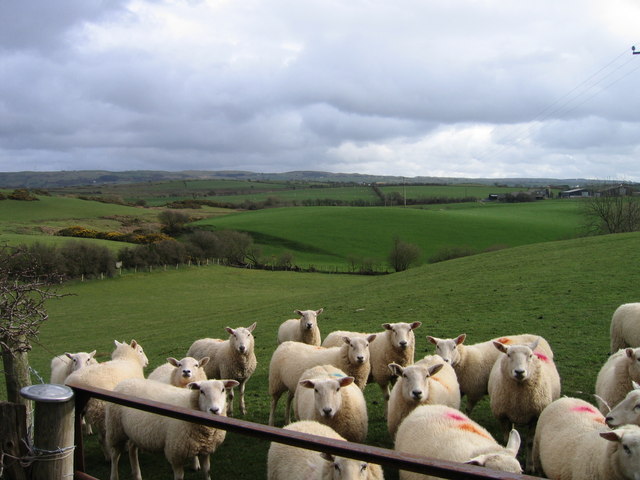
Author Ian Medcalf Licence CC BY-SA 2.0  Source Wikipedia Sheep Farnubf in Wakes


Some food and drink products derive their qualities from the climate, soil or some other attribute of the place in where they are produced or by production methods that have been developed in that place.  Well known examples include champagne, Scotch whisky and Parma ham. Consumers seek out such products because of their place of origin or manner of preparation.  It is therefore in the public interest as well as the interests of those producers that suppliers of competing goods from other regions do not market their goods as goods coming from the same region.

The signs used on products that have a specific geographical origin and possess qualities or a reputation that are due to their origin are known as geographical indications.  They are a type of intellectual asset that the United Kingdom and other parties to the WTO agreement are required to protect by Section 3 of the Agreement on Trade-Related Aspects of Intellectual Property Rights ("TRIPS").  In the United Kingdom, these requirements are satisfied by the law of passing off, the registration of certification and collective marks and sui generis EU intellectual property rights established by Regulation (EU) No 1151/2012 of the European Parliament and of the Council of 21 November 2012 on quality schemes for agricultural products and foodstuffs OJ L 343, 14.12.2012, p. 1–29.
Regulation 1151/2012 establishes a system for the registration of the names of food or drink products in the following categories: protected designations of origin ("PDO"), protected geographical indications ("PGI") and traditional specialities guaranteed ("TSG").  
PDO: The name of an area used as a designation for an agricultural product or a foodstuff,
  • which comes from such an area, place or country,
  • whose quality or properties are significantly or exclusively determined by the geographical environment, including natural and human factors,
  • whose production, processing and preparation take place within the determined geographical area.
Conwy mussels are an example of a PDO.  Goods that are protected by a PDO are sold under a red and gold roundel of ploughed fields and a circle of stars.   

PGI:  The name of an area used as a description of an agricultural product or a foodstuff:
  • which comes from such an area, place or country,
  • which has a specific quality, goodwill or other characteristic property, attributable to its geographical origin,
  • at least one of the stages of production, processing or preparation takes place in the area. 
Traditional Welsh Caerphilly cheese is an example of a PGI.  Goods protected by a PGI are sold under a blue and gold roundel of similar design to that of the PDO.
TSG:  The name of a product that has a "specific character" in that its raw materials, production method or processing are "traditional".  "Specific character" means "characteristic production attributes which distinguish a product clearly from other similar products of the same category."  "Traditional" means "proven usage on the domestic market for a period that allows transmission between generations; this period is to be at least 30 years".   They are not necessarily connected with a particular geographical area.   Traditional Bramley apple pie fillings are an example of a TSG.  Goods protected as TSGs are sold under a blue and gold roundel consisting of stars and the words "Traditional Speciality Guaranteed."
More details of the scheme are provided in the DEFRA Guidance EU protected food names: how to register food or drink products.  
Applications for registration are made to the authorities of a member state to consider whether the product complies with the regulation.  In the UK the relevant authority is the Department for the Environment, Food and Rural Affairs ("DEFRA").   DEFRA  publishes applications to enable third parties to make representations in opposition to the application if they so wish.  If the national authority upholds the application it is forwarded to the Commission for final consideration.  The Commission publishes the application to allow those injecting to the application to oppose it.   In there is no opposition or the opposition fails the application proceeds to registration.   

Member states are required to take administrative and judicial steps to prevent or stop the unlawful use of PDO and PGI  by art 13 (5) of the regulation.  Similarly, TSG are protected against any misuse, imitation or evocation, or against any other practice liable to mislead the consumer by art 24 (1) and member states are required to ensure that sales descriptions used at national level do not give rise to confusion with names that are registered by art 24 (2).  Suppliers of foods or drinks that are protected by the regulation may take proceedings against infringers of their rights may take proceedings in Wales in the High Court or County Court.
The regulation will cease to apply to the UK from 23:00 on 31 Dec 2020.  However, art 54 (2) of the agreement by which the UK withdrew from the EU requires the British government to continue the protection for PDO, PGI and TSG afforded by the regulation under the laws of the UK.  The mechanism by which the UK will implement that obligation is to incorporate the regulation into the laws of the UK with effect from 23:00 on 31 Dec 2020 under s.3 (1) of the European Union (Withdrawal Act) 2018 as modified by  The Agricultural Products, Food and Drink (Amendment) (EU Exit) Regulations 2019 pursuant to s.8 (1) of the Act.

The new British scheme is essentially a continuation of the EU scheme with DEFRA performing the functions formerly carried out by the Commission.   The one big change that the public is likely to notice will be the replacement of the EU roundels for PDO, PGI and TSG with the following British roundels:
Source DEFRA  Licence Open Government Licence

Further information is available from the DEFRA press release of 22 Oct 2020  New rules and logos to protect British food and drinks. its guidance EU protected food names: how to register food or drink products and my article Geographical Indications in the UK after 31 Dec 2020  30 Sept 2020 NIPC Law. Anyone wishing to discuss this topic may call me on 020 7404 5252 during office hours or send me a message through my contact page.