Showing posts with label passing off. Show all posts

Tuesday, 17 September 2024

Re Gary Atkinson's Trade Mark - Owen v Atkinson


Jane Lambert

Trade Marks Registry (Judi PikeRe Atkinson's Trade Mark, Huw Richard Owen v Gary Atkinson  BL O/1202/23 20 Dec 2023

This was an application to the Registrar of Trade Marks by Huw Richard Owen ("Mr Owen") for a declaration that UK trade mark number 3687974 which Gary Atkinson ("Mr Atkinson") had registered for a range of goods in classes 1, 7, 11, 19, 21, 31 and 37 was invalid under s.47 (1) and/or (2) (b) of the Trade Marks Act 1994.  Mr Owen alleged that the mark had been registered in bad faith within the meaning of s.3 (6) and that he had an "earlier right" in relation to which the condition set out in s.5 (4) had been satisfied. 

S.5 (4) (a) provides:

"A trade mark shall not be registered if, or to the extent that, its use in the United Kingdom is liable to be prevented—
(a)    by virtue of any rule of law (in particular, the law of passing off) protecting an unregistered trade mark or other sign used in the course of trade, where the condition in subsection (4A) is met."

Mr Owen claimed the right to bring an action for passing off to restrain Mr Atkinson's use of trade mark number UK3687974 on the ground that he had run a licensed pet shop on the island called "Anglesey Aquatics" or "Mon Aquatics" since January 2017.  He also claimed that Mr Atkinson's registration and use of that mark amounted to bad faith.  Mr Atkinson denied Mr Owen's allegations and requested sight of the evidence upon which Mr Owen relied.

Neither party was legally represented and the invalidity proceedings came on before Judi Pike ("Ms Pike") acting on behalf of the Registrar.  As neither side had requested a hearing, Ms Pike determined the application on written submissions and evidence.  She delivered her decision on 20 Dec 2023 (see Re Atkinson's Trade Mark, Owen v Atkinson BL O/1202/23 20 Dec 2023).

After referring to s.5 and s.47 of the Act Ms Pike cited paras [55] and [56] of Judge Melissa Clarke's judgment in Jadebay Ltd and others v Clarke-Coles Ltd (t/a Feel Good UK) [2017] EWHC 1400 (IPEC) (13 June 2017):

“[55]. The elements necessary to reach a finding of passing off are the ‘classical trinity' of that tort as described by Lord Oliver in the Jif Lemon case (Reckitt & Colman Product v Borden [1990] 1 WLR 491 HL, [1990] RPC 341, HL), namely goodwill or reputation; misrepresentation leading to deception or a likelihood of deception; and damage resulting from the misrepresentation. The burden is on the Claimants to satisfy me of all three limbs. 

[56] In relation to deception, the court must assess whether "a substantial number" of the Claimants' customers or potential customers are deceived, but it is not necessary to show that all or even most of them are deceived (per Interflora Inc v Marks and Spencer Plc [2012] EWCA Civ 1501, [2013] FSR 21).”

She also mentioned Lord MacNaghten's speech in Inland Revenue Commissioners v Muller & Co’s Margarine Ltd [1901] AC 217 at 223:  

“What is goodwill? It is a thing very easy to describe, very difficult to define. It is the benefit and advantage of the good name, reputation and connection of a business. It is the attractive force which brings in custom. It is the one thing which distinguishes an old-established business from a new business at its first start."

As Mr Atkinson had applied for his trade mark on 31 Aug 2021, Ms Pike held at para [12] of her decision that Mr Owen must show that at that date he had sufficient goodwill in his business to bring an action for passing off.  

Mr Owen made a witness statement stating that he had traded as Anglesey Aquatics and Môn Aquatics from when he opened his business in 2017. One of the exhibits is a licence under The Animal Welfare (Licensing of Activities involving Animals (Wales) Regulations 2021 covering the period from 25 March 2022 to 24 March 2024 identifying his business as Môn/Anglesey Aquatics trading from an address on the island,.  He also exhibited a business card, screen prints of a Facebook page, a web page, a social media comment page and an address label.   A screenshot showed that Mr Owen owned the domain name <monangleseyaquatics.co.uk> but it was not clear when if at all he had ever used it.  Ms Pike observed at para [19] that mere ownership of a domain name does not prove that the name is in use or has contributed to the accrual of goodwill.

None of these exhibits were dated and the hearing officer expressed Mr Owen's first difficulty in para [20]:

"The assessment as to whether Mr Owen owned sufficient goodwill at the relevant date of 31 August 2021 is tied to goodwill accrued prior to that date. This makes it very important that exhibits are dated or, if undated, other evidence corroborates them and make it possible to place their significance as generating custom prior to the relevant date. It is also very important that the evidence which is dated shows that use which generated custom took place before the relevant date. I have already referred to the lack of dating in respect of the delivery label and the social media and website screenshots. Exhibits MA35, MA36 and MA37 are photographs of shelves stocked with aquatic goods (such as decorative rocks and fish food). They are undated and Mr Owen refers to them in the present tense: “I have a number of accounts open with a number of these [trade accounts with suppliers, distributors and wholesalers], which entitles my business to buy and sell all goods associated within the aquatic trade as in pictures Exhibit MA35, Exhibit MA36 and Exhibit MA37…”

She added at [23]:

"What Mr Owen must show in evidence is that, by 31 August 2021, he owned a protectable goodwill in the signs relied upon, sufficient to have prevented the use of the contested mark under the law of passing off. He states that he has been using Mon Aquatics/Anglesey Aquatics since January 2017, but the evidence falls a long way short of demonstrating the relevant goodwill in either or both names. I cannot tell from the evidence how much turnover was achieved prior to the relevant date as there are no such figures and no dated invoices. There are no dated website or social media screenshots. Owning an unused domain name does not show goodwill. Goodwill is the attractive force which brings in custom, but there is no evidence to show when that custom was generated, and how much custom was generated. The only dated evidence of trade dates from fourteen months after the relevant date. The pet shop licence is dated after the relevant date. Although there are screenshots of messages from customers who went to Mr Atkinson’s shop instead of Mr Owen’s premises, they are not dated. In the absence of any content which pre-dates the relevant date of 31 October 2021, it is not possible to put these in context."

Another difficulty is that Mr Owen gave no evidence of sales from which the hearing officer could assess the level of goodwill.   Referring to Thomas Mitcheson QC's judgment in Smart Planet Technologies, Inc. v Rajinda Sharma BL O/304/20, 2 June 2020, she said:

"The law protects a small goodwill but not a trivial one; i.e. sales so small that the goodwill is trivial."

Further, "Aquatics" strongly alluded to the type of goods and "Mon/Anglesey" the location of the business.  She had already noted that where a sign is descriptive or weakly distinctive, the evidence needs to be compelling.  At para [28] she quoted Lord Simonds's speech in Office Cleaning Services Limited v Westminster Window & General Cleaners Limited [1946] 63 RPC 39:

“Where a trader adopts words in common use for his trade name, some risk of confusion is inevitable. But that risk must be run unless the first user is allowed unfairly to monopolise the words. The court will accept comparatively small differences as sufficient to avert confusion. A greater degree of discrimination may fairly be expected from the public where a trade name consists wholly or in part of words descriptive of the articles to be sold or the services to be rendered.” 

She concluded at para [29] that Mr Owen's case based on s.47 (2) failed.

Turning to the question of whether Mr Atkinson's application had been made in bad faith, Ms Pike referred to para [67] of Lord Justice Floyd's judgment in Sky Ltd and others v Skykick, UK Ltd and another (Rev2) [2021] RPC 17, [2021] EWCA Civ 1121:

"The following points of relevance to this case can be gleaned from these CJEU authorities:

1. The allegation that a trade mark has been applied for in bad faith is one of the absolute grounds for invalidity of an EU trade mark which can be relied on before the EUIPO or by means of a counterclaim in infringement proceedings: Lindt at [34]. 

2. Bad faith is an autonomous concept of EU trade mark law which must be given a uniform interpretation in the EU: Malaysia Dairy Industries at [29]. 

3. The concept of bad faith presupposes the existence of a dishonest state of mind or intention, but dishonesty is to be understood in the context of trade mark law, i.e. the course of trade and having regard to the objectives of the law namely the establishment and functioning of the internal market, contributing to the system of undistorted competition in the Union, in which each undertaking must, in order to attract and retain customers by the quality of its goods or services, be able to have registered as trade marks signs which enable the consumer, without any possibility of confusion, to distinguish those goods or services from others which have a different origin: Lindt at [45]; Koton Mağazacilik at [45]. 

4. The concept of bad faith, so understood, relates to a subjective motivation on the part of the trade mark applicant, namely a dishonest intention or other sinister motive. It involves conduct which departs from accepted standards of ethical behaviour or honest commercial and business practices: Hasbro at [41]. 

5. The date for assessment of bad faith is the time of filing the application: Lindt at [35]. 

6. It is for the party alleging bad faith to prove it: good faith is presumed until the contrary is proved: Pelikan at [21] and [40].

7. Where the court or tribunal finds that the objective circumstances of a particular case raise a rebuttable presumption of lack of good faith, it is for the applicant to provide a plausible explanation of the objectives and commercial logic pursued by the application: Hasbro at [42]. 

8. Whether the applicant was acting in bad faith must be the subject of an overall assessment, taking into account all the factors relevant to the particular case: Lindt at [37]. 

9. For that purpose it is necessary to examine the applicant’s intention at the time the mark was filed, which is a subjective factor which must be determined by reference to the objective circumstances of the particular case: Lindt at [41] – [42].

 10. Even where there exist objective indicia pointing towards bad faith, however, it cannot be excluded that the applicant’s objective was in pursuit of a legitimate objective, such as excluding copyists: Lindt at [49]. 

11. Bad faith can be established even in cases where no third party is specifically targeted, if the applicant’s intention was to obtain the mark for purposes other than those falling within the functions of a trade mark: Koton Mağazacilik at [46]. 

12. It is relevant to consider the extent of the reputation enjoyed by the sign at the time when the application was filed: the extent of that reputation may justify the applicant’s interest in seeking wider legal protection for its sign: Lindt at [51] to [52]. 

13. Bad faith cannot be established solely on the basis of the size of the list of goods and services in the application for registration: Psytech at [88], Pelikan at [54]”.

Citing Red Bull GmbH v Sun Mark Limited and Sea Air & Land Forwarding Limited [2012] EWHC 1929 (Ch) the hearing officer held that it was necessary to ascertain what Mr. Atkinsion knew when he applied for his trade mark.  She observed that an allegation of bad faith is a serious allegation which must be distinctly proved.  She said at [36] that the basis of the bad faith claim was that Mr Atkinson had taken Mr Owen’s Welsh business name which he has been using since 2017. As Ms Pike had found that Mr Owen had not demonstrated in his evidence that he had sufficient goodwill in the name Mon Aquatics (or Anglesey Aquatics) prior to the relevant date of 31 August 2021, the case under s,47 (1) must also fail.

As Mr Owen's application for trade mark UK3687974 to be declared invalid failed, Mr Atkinsin's trade mark remains on the register.   The hearing officer said that Mr Atkinson would have been entitled to costs had he filled in the appropriate form before the hearing.  As he did not do so, Ms Pike made no order for costs.

As I said above, neither party was represented. Time and possibly money might have been saved had either or preferably both of them taken advantage of the pro bono IP Clinic that has operated at the Menai Science  Park since 2018.   This case was just the sort of issue that the clinic was set up to resolve.  Anyone wishing to discuss this case may do so by calling me on 020 7494 5252 during office hours or sending me a message through my contact page.

Monday, 10 October 2022

Welsh Vodka Litigation- AU Vodka v NE10 Vodka


Jane Lambert

Chancery Division (Mr Justice Mellor) AU Vodka Ltd v NE10 Vodka Ltd and another [2022] EWHC 2371 (Ch) (21 Sept 2022)

Whisky Galore is the title of a novel by Sir Compton Mackenzie about the shipwreck of a cargo vessel off the Hebrides in the Second World War. The ship had been carrying whisky and the story is about a battle of wits between islanders who had salvaged the freight and hidden and the authorities who were doing their best to stop them.  I was reminded of that novel by the passing-off action that AU Vodka Ltd has brought against NE10 Vodka Ltd.

AU distils and distributes the vodka in the gold bottle and NE10 the vodka in the metallic blue.  Both companies are incorporated in Wales and carry on business in Swansea.  The action has been brought in the Intellectual Property List of the Chancery Division in London even though it could have been brought in the Business and Property Courts of Wales in Cardiff or the Intellectual Property Enterprise Court.

The first round of the proceedings was an application for an interim injunction to restrain NT10 from marketing and selling its products until judgment or further order.   It was heard by Mr Justice Mellor who delivered judgment in AU Vodka Ltd v NE10 Vodka Ltd and another [2022] EWHC 2371 (Ch) on 21 Sept 2022. The judge dismissed the application because he found that there would be a  greater risk of injustice to NE10 were he to grant the order than there would be to AU in refusing it.  I analysed his judgment in Passing-off: AU Vodka v NW10 Vodka in NIPC Law on 9 Oct 2022.

The next stage of the litigation will be a trial which the judge directed to take place in January,  In that hearing the court will consider the substantial issues.  The judge did not have to consider the merits of the case for the interim injunction application.  All he had to do was decide whether AU could win.   Mr Justice Mellor said at para [80] of his judgment that there was "a serious issue to be tried" but the case was "finely balanced."

Anyone wishing to discuss this case can call me on 020 7404 5252 during office hours or send me a message through my contact form. 

Monday, 26 October 2020

The New Protected Food Names Scheme as it will apply in Wales

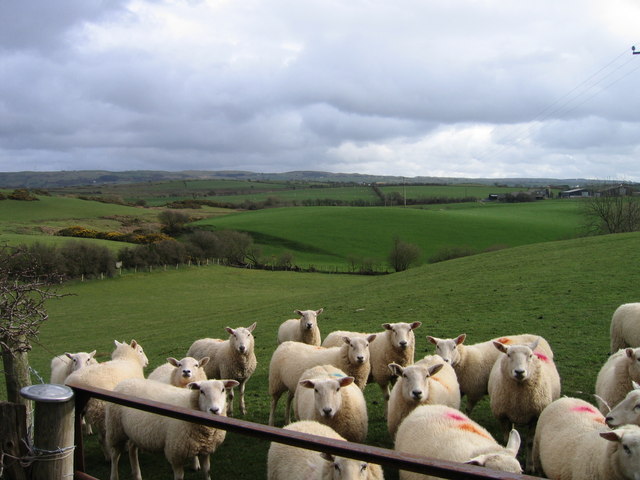
Author Ian Medcalf Licence CC BY-SA 2.0  Source Wikipedia Sheep Farnubf in Wakes


Some food and drink products derive their qualities from the climate, soil or some other attribute of the place in where they are produced or by production methods that have been developed in that place.  Well known examples include champagne, Scotch whisky and Parma ham. Consumers seek out such products because of their place of origin or manner of preparation.  It is therefore in the public interest as well as the interests of those producers that suppliers of competing goods from other regions do not market their goods as goods coming from the same region.

The signs used on products that have a specific geographical origin and possess qualities or a reputation that are due to their origin are known as geographical indications.  They are a type of intellectual asset that the United Kingdom and other parties to the WTO agreement are required to protect by Section 3 of the Agreement on Trade-Related Aspects of Intellectual Property Rights ("TRIPS").  In the United Kingdom, these requirements are satisfied by the law of passing off, the registration of certification and collective marks and sui generis EU intellectual property rights established by Regulation (EU) No 1151/2012 of the European Parliament and of the Council of 21 November 2012 on quality schemes for agricultural products and foodstuffs OJ L 343, 14.12.2012, p. 1–29.
Regulation 1151/2012 establishes a system for the registration of the names of food or drink products in the following categories: protected designations of origin ("PDO"), protected geographical indications ("PGI") and traditional specialities guaranteed ("TSG").  
PDO: The name of an area used as a designation for an agricultural product or a foodstuff,
  • which comes from such an area, place or country,
  • whose quality or properties are significantly or exclusively determined by the geographical environment, including natural and human factors,
  • whose production, processing and preparation take place within the determined geographical area.
Conwy mussels are an example of a PDO.  Goods that are protected by a PDO are sold under a red and gold roundel of ploughed fields and a circle of stars.   

PGI:  The name of an area used as a description of an agricultural product or a foodstuff:
  • which comes from such an area, place or country,
  • which has a specific quality, goodwill or other characteristic property, attributable to its geographical origin,
  • at least one of the stages of production, processing or preparation takes place in the area. 
Traditional Welsh Caerphilly cheese is an example of a PGI.  Goods protected by a PGI are sold under a blue and gold roundel of similar design to that of the PDO.
TSG:  The name of a product that has a "specific character" in that its raw materials, production method or processing are "traditional".  "Specific character" means "characteristic production attributes which distinguish a product clearly from other similar products of the same category."  "Traditional" means "proven usage on the domestic market for a period that allows transmission between generations; this period is to be at least 30 years".   They are not necessarily connected with a particular geographical area.   Traditional Bramley apple pie fillings are an example of a TSG.  Goods protected as TSGs are sold under a blue and gold roundel consisting of stars and the words "Traditional Speciality Guaranteed."
More details of the scheme are provided in the DEFRA Guidance EU protected food names: how to register food or drink products.  
Applications for registration are made to the authorities of a member state to consider whether the product complies with the regulation.  In the UK the relevant authority is the Department for the Environment, Food and Rural Affairs ("DEFRA").   DEFRA  publishes applications to enable third parties to make representations in opposition to the application if they so wish.  If the national authority upholds the application it is forwarded to the Commission for final consideration.  The Commission publishes the application to allow those injecting to the application to oppose it.   In there is no opposition or the opposition fails the application proceeds to registration.   

Member states are required to take administrative and judicial steps to prevent or stop the unlawful use of PDO and PGI  by art 13 (5) of the regulation.  Similarly, TSG are protected against any misuse, imitation or evocation, or against any other practice liable to mislead the consumer by art 24 (1) and member states are required to ensure that sales descriptions used at national level do not give rise to confusion with names that are registered by art 24 (2).  Suppliers of foods or drinks that are protected by the regulation may take proceedings against infringers of their rights may take proceedings in Wales in the High Court or County Court.
The regulation will cease to apply to the UK from 23:00 on 31 Dec 2020.  However, art 54 (2) of the agreement by which the UK withdrew from the EU requires the British government to continue the protection for PDO, PGI and TSG afforded by the regulation under the laws of the UK.  The mechanism by which the UK will implement that obligation is to incorporate the regulation into the laws of the UK with effect from 23:00 on 31 Dec 2020 under s.3 (1) of the European Union (Withdrawal Act) 2018 as modified by  The Agricultural Products, Food and Drink (Amendment) (EU Exit) Regulations 2019 pursuant to s.8 (1) of the Act.

The new British scheme is essentially a continuation of the EU scheme with DEFRA performing the functions formerly carried out by the Commission.   The one big change that the public is likely to notice will be the replacement of the EU roundels for PDO, PGI and TSG with the following British roundels:
Source DEFRA  Licence Open Government Licence

Further information is available from the DEFRA press release of 22 Oct 2020  New rules and logos to protect British food and drinks. its guidance EU protected food names: how to register food or drink products and my article Geographical Indications in the UK after 31 Dec 2020  30 Sept 2020 NIPC Law. Anyone wishing to discuss this topic may call me on 020 7404 5252 during office hours or send me a message through my contact page.
Wednesday, 24 April 2019

Choosing the Right IP Protection

Author Ron Maijen
Licence Creative Commons Attribution0Share Alike 2.0 Generic
Source Wikipedia Playing Card


Jane Lambert

There is usually more than one way to protect an intellectual asset.  A brand, for instance, may be protected by trade mark registration or by the law of passing off. A business owner's choice will depend on many factors such as the business's resources, the value of the intellectual asset, the vulnerability of the IP right to cancellation and so on.

Trade Mark Registration
A trade mark can be registered for the United Kingdom alone or for the whole of the European Union including the United Kingdom for so long as the UK remains a member of the EU.  It is also possible to register a mark in some or all of the countries that are party to the Madrid Protocol by applying for an international registration. 

In each case, there are three sets of costs to take into account.  The first is for searches to ascertain whether there are any early registrations that might conflict with the application. Secondly, there are the fees charged by each office for processing the application.  These start at £200 for an application to the Trade Marks Registry of the Intellectual Property Office ("the IPO") for the registration of a mark for one class of goods in the UK.  Thirdly, there may be attorneys' fees for conducting the search, drafting the application and dealing with objections from examiners or third parties in the IPO or indeed the registries of any of the other countries in which registration is sought.  Sometimes a hearing may be necessary for which counsel must be briefed.  The cost of a trade mark application may, therefore, range from a few hundred pounds for a single country where there is no objection to many thousands of pounds for a contested application.

A registration may be challenged even after it has been granted on the grounds that the mark should never have been registered or that it should be revoked because it has not been used or it has ceased to be distinctive.  The challenge may be brought in the registry or by way of counterclaim in infringement proceedings.

Although some trade mark infringements are criminal offences in the UK, it is primarily the registered proprietor's responsibility to enforce his or her rights.  The small claims track of the Intellectual Property Enterprise Court ("IPEC") can hear claims for damages of £10,000 or less that can be tried in no more than a day.  In the small claims track the costs that can be recovered from an unsuccessful party are limited to a few hundred pounds.   Claims up to £500,000 that can be tried within 2 days can be brought in IPEC's multitrack. The costs that may be recovered from an unsuccessful party in IPEC are capped at £50,000. Any other claim has to be brought in the Chancery Division of the High Court where cases and costs are managed but the amount that can be recovered from the unsuccessful party is unlimited.

Passing off
The right to bring an action for passing off arises automatically so there are no application costs.  On the other hand, is usually more difficult and hence more expensive to bring such an action than it is to sue for trade mark infringement.  The claimant has to prove that he or she has goodwill by reference to a trade mark, trade name, logo, get-up or other indicia which usually requires voluminous evidence of sales and advertising. Secondly, he or she has to prove that the defendant has misrepresented a connection with his or her goods, services or business by, for example, using the same or similar name, mark, logo or get-up. Thirdly, the claimant has to prove loss or damage such as loss of sales or reputation.

Actions for passing off can be brought in the small claims track or multitrack of IPEC or the High Court with the same costs consequences as for trade mark litigation.  Actions for passing off are often brought with trade mark infringement claims.

Since it has become possible to register marks for services, there are very few businesses that decide deliberately to rely solely on the law of passing off. Quite apart from the ease with which a trade mark action can be brought, a trade mark is a right that can be assigned, charged or licensed for money or moneysworth which is not the case with an action for passing off.

Designs
A new design with individual character can be registered for up to 25 years for the UK alone as a registered design or for the whole of the EU including the UK as a registered Community design ("RCD").  Any design that can be registered as a registered design or as an RCD enjoys automatic protection against copying throughout the EU including the UK for 3 years as an unregistered Community design ("UCD").  As the UK is now party to the Hague Agreement concerning the International Registration of International it is possible to apply for the registration of the design in the contracting countries from a single filing.

Original designs of the shape or configuration (whether internal or external) of the whole or part of an article made by UK nationals or nationals of certain other countries are protected automatically against copying for up to 15 years in the UK by unregistered design right.

Artwork for surface decoration can be protected automatically against copying for the life of the author plus 70 years by copyright in the UK and other countries. Certain other designs can be protected by copyright for the same term as works of artistic craftsmanship.

The process of registering a design or RCD is simpler than the process of registering a trade mark because there is no substantive examination.  Accordingly, the process is quicker and cheaper. The IPO charges £50 to register a single design as a registered design and the European Union Intellectual Property Office ("EUIPO") €230 to register an RCD. However, design registrations can be challenged after grant by cancellation proceedings in the IPO or the EUIPO or by way of counterclaim in infringement proceedings.

Design registration is appropriate for high-value items that are likely to be on the market for a long time such as jewellery or electrical appliances.  For toys, fashion items and other items that are likely to go out of style quickly the terms provided by UCD and unregistered design right may be quite long enough.

Actions for the infringement of registered designs or RCD must be brought in the Patents Court or IPEC multitrack regardless of value.  They cannot be brought in the IPEC small claims track.  Claims for the infringement of UCD, unregistered design right or copyright may be brought in the IPEC small claims track or multitrack or the Chancery Division.

Technology
Those who have created a new product or process can choose to disclose it to the world in return for a patent or to keep it under wraps in the hope that nobody will work out how to make or use it.  In the case of CocaCola and Chartreuse, keeping stumm can be a very effective strategy as I noted in Trade Secrets and Non-Disclosure Agreements 1 April 2019.

Patents are the most difficult and expensive IP right to acquire but they can also be the most valuable.  They prohibit not just the copying of an invention but also making, importing, distributing, keeping or using it.  A person who makes or uses an infringing item can be liable even if he made or used the product or process quite honestly without referring to the patented product or knowing the existence of the patent.

Patents can be granted for the UK alone by the IPO or for the UK and up to over 40 other countries by the European Patent Office ("EPO"). Patents can also be granted pursuant to a single application in all the countries that are party to the Patent Cooperation Treaty ("PCT"). An application for a patent for the UK alone rarely costs less than £5,000 (see Dehns The Cost of a Patent).  According to Roland Berger, the cost of obtaining and maintaining a typical European patent in up to 6 countries from 10 years cost over €30,000 (see Roland Berger Market Research Study on the Cost of Patenting).  Registering the patent in the USA, China, Japan, South Korea, Brazil, Russia, India and other industrial countries can easily exceed £100,000.  In addition to searches and office fees, applicants have to pay for renewal fees which increase over the years in some countries. 

Attorneys' fees are also more expensive than for design and trade mark applications since the specification has to be sufficiently clear and complete to enable a person with the appropriate skill and knowledge to make or use the invention after the patent expires. The monopoly claimed must be broad enough for the owner of the patent to have the widest possible protection but it must not be so wide as to be invalid.

Patents granted by the EPO can be challenged immediately after grant in proceedings called "opposition". In the UK and other countries, patents can be challenged in the office that granted them in revocation proceedings or by way of counterclaim in infringement proceedings.  Such proceedings tend to be expensive.  According to TaylorWessing's Patent Map, patent infringement proceedings can cost between £200,000 and £1 million in London.  Claims have to be brought in the Patents Court or IPEC multitrack. They cannot be brought in the small claims track.

Businesses can rely on the law of confidence and the new Trade Secrets Directive to prevent unauthorized access to, use or disclosure of undisclosed technical information for so long as it remains outside the public domain. Trade secrecy has proved to be an effective way to protect the source code of computer programs over the years.  That protection is lost once the information enters the public domain which can result from reverse engineering or parallel research and development.

Software is also protected from reproduction by literary copyright for the life of the author plus 70 years. Data can be protected from unauthorized extraction and re-utilization by database rights. A modified form of unregistered design right can protect semiconductor topographies from unlicensed reproduction for up to 25 years.

Creativity
Works of art and literature including broadcasts, films and sound recordings as well as original artistic, dramatic, literary and musical works are protected automatically from copying, publishing, renting and lending, performance, communication to the public and adaptation for the life of the author plus 70 years. Her Majesty's Government is party to the Berne Convention which extends such protection to most countries of the world.  Actors, dancers, musicians, singers and other performers automatically have the right to object to the unauthorized broadcasting, filming or taping of their performances and the distribution of copies of those performances by virtue of Part II of the Copyright, Designs and Patents Act 1988. Those rights are known as rights in performancesBroadcasters, film and sound recording studios which have contracted to record such performances also have the right to object to unauthorized broadcasting, filming or taping. Although piracy (copyright infringement on an industrial scale) and bootlegging (infringement of rights in performances on an industrial scale) are criminal offences, primary responsibility for enforcing copyrights and rights in performances rests with the rights holders. They can bring claims up to £10,000 in the small claims track of IPEC, £500,000 in the IPEC multitrack and all other claims in the Chancery Division.

Conclusion
This is the toolkit that is available to rights holders. I shall discuss how to select those tools at my talk on What is IP? et cetera at M-SParc (the Menai Science Park) on Friday, 26 April 2019 at 13:00 (see Anglesey to celebrate World IP Day 10 April 2019 and Maximizing your Intellectual Assets  23 April 2019).  If you want to attend you can register here.  If you can't make that seminar but would like my slides or handout or wish to discuss any other IP matter, please call me on 020 7404 5252 during office hours or send me a message through my contact form.